

Futureproofing #40: Celia Hollander
The LA artist talks life after the Eaton fire, process, acoustics, teaching, and more.

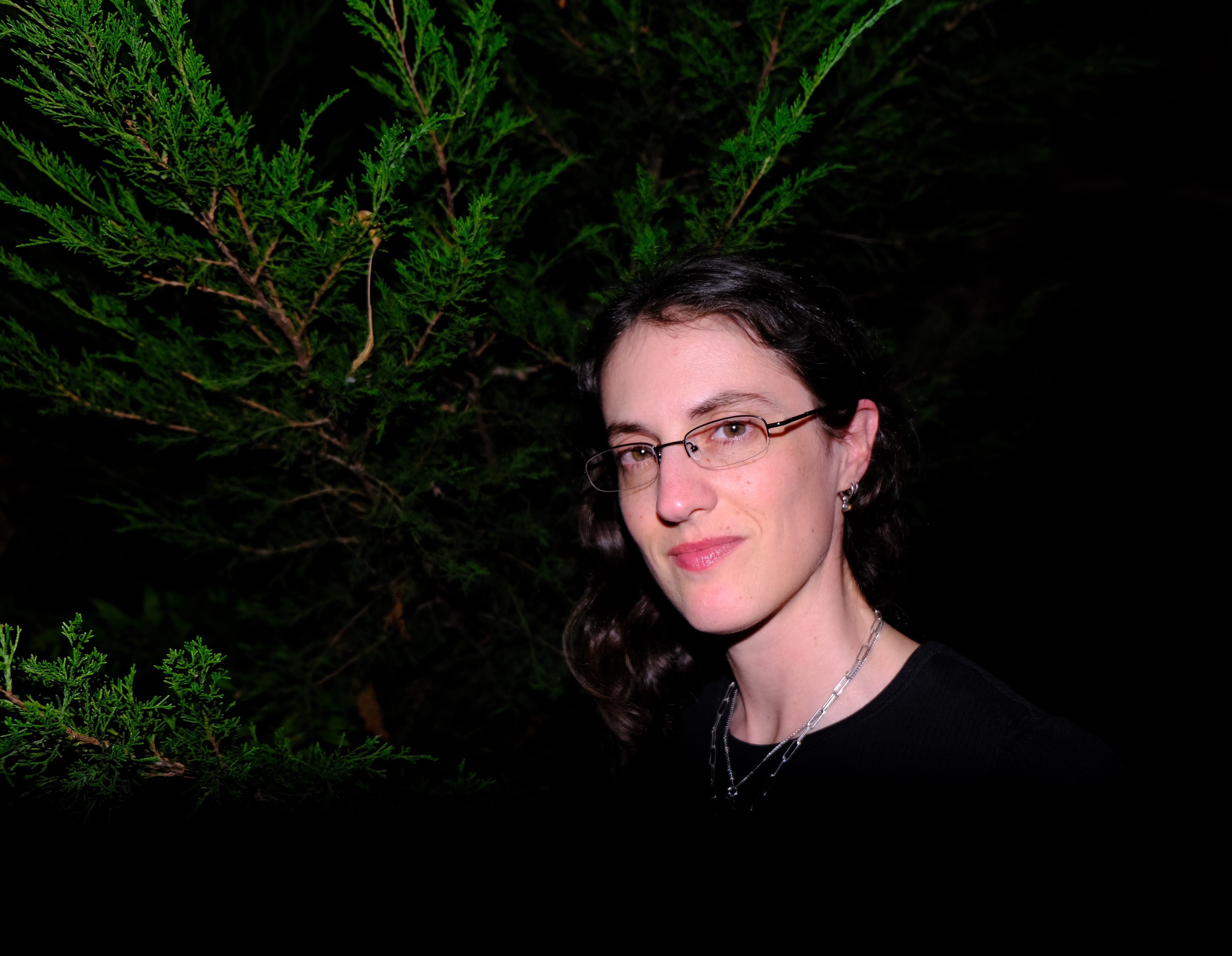
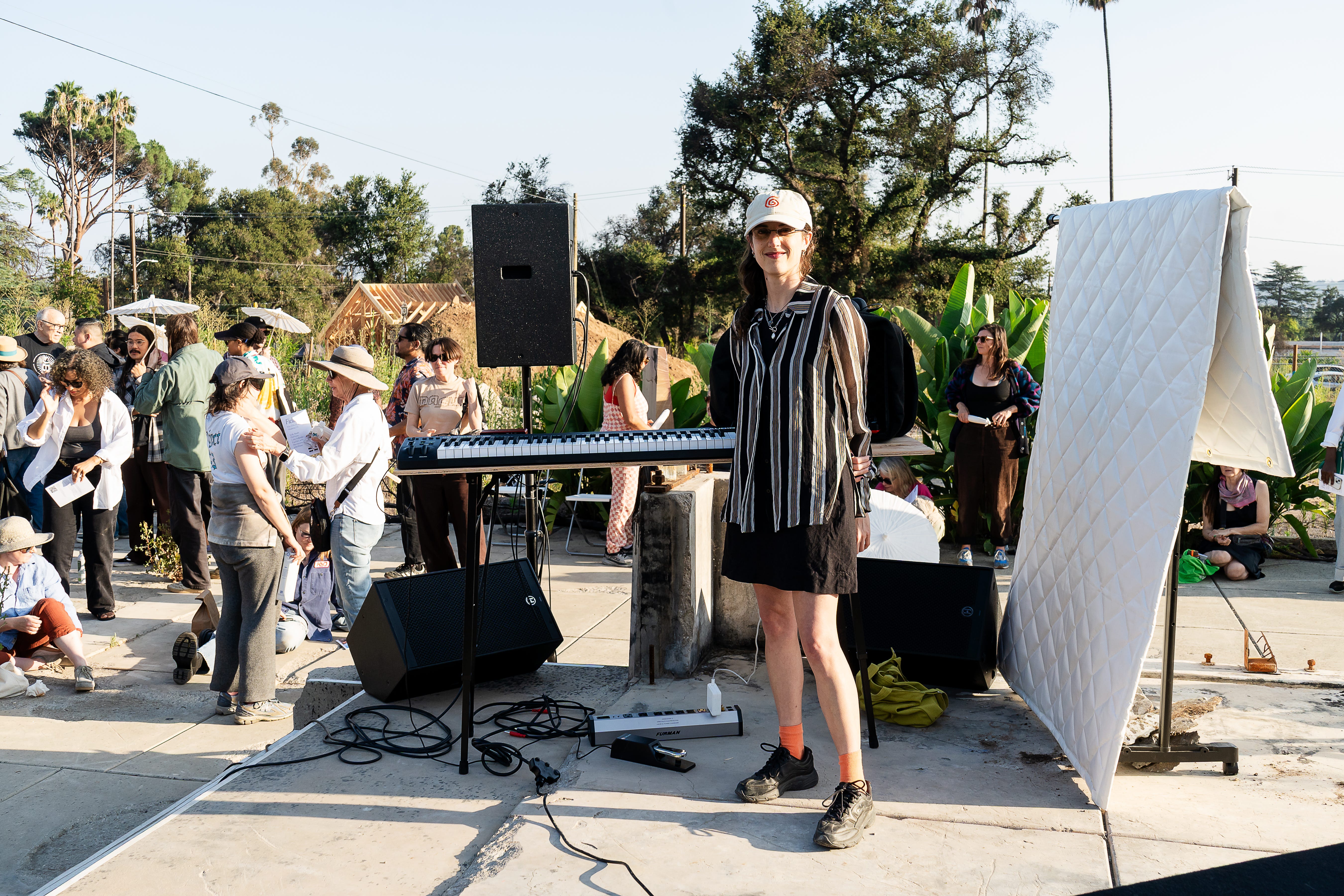
This past May, Celia Hollander played a live set at a LAND event on the demolition site of a burned-down home in Altadena. The house belonged to fellow artist Kelly Akashi, who let another artist, Phil Peters, record the sounds of the burnt-out husk being knocked down. This became raw material for a subwoofer installation laid out across the ground.You could sit or stand on the giant, geometric subwoofers, and really feel the low-end—the sound of a community being destroyed, but also on its way to being rebuilt.
Hollander’s performance was poignant because her own house was destroyed in the Eaton Fire. (You may also remember my own run-in with the fire.) Field Set was a return to a post-apocalyptic place, a way to impose structure on a site that had been violently deconstructed. Where Peters’ installation was full of rumbling bass and dread dub tones—an industrial orchestra of dispossession—Hollander’s set was bright,hopeful, and appropriately disjointed, like a glimpse into several potential futures branching off from a single point.
Based partly on her album Perfect Conditions, a concept album focusing on how elements can interact almost randomly to create natural phenomena (with subtitles like “Boiling Water” and, yes, “Forest Fire”), the performance gleamed with the irrepressible dance-not-dance spirit of Hollander’s music. Arpeggios form out of thin air and braid a new strand to follow, while drums and dislocated basslines frame the music momentarily before bowing out again. At times it sounds almost like footwork, while elsewhere it recalls Japanese composers like Midori Takada or Yasuaki Shimizu, who used tuned percussion and other unusual instruments to blur the line between the organic and the artificial.
The work had a newfound resonance in Altadena, particularly with around 100 people—some from the area and some who hadn’t been since the disaster happened in January 2025—watching her perform music that had first been recorded in a room destroyed by fire. Hollander’s music isn’t particularly emotional or demanding; she prefers to luxuriate in sound, or let rhythms and arpeggios tire themselves out. But in this context it took on a whole new dimension: cathartic, upbeat and (above all) radiant and beautiful, a side of her work that often goes unrecognized by a scene intent on boxing her in as some kind of “experimental” artist.
That’s probably because Hollander is also a film scorer, a painter, and an educator. She teaches composition and acoustics, a student (and professor) of the very physics of sound itself. She’s not afraid to get nerdy about it, or integrate theory and process into her music—like on Timekeeper, where she tried to channel specific times of day using a set of sounds and three different processes—but her music never feels academic, stuffy, or random, even when she’s using randomization as a composition tool.
Both Timekeeper and Perfect Conditions are well worth a listen for the uninitiated. The latter still is still invigorating and fresh, skipping through dance music trends with the ear of a dilettante and the chops of a truly great producer. While she works on new music and continues to rebuild her life in Los Angeles, I met Hollander at a wine bar in Eagle Rock to talk about the Altadena performance, living through the Eaton Fire, and how she approaches her multidisciplinary career.
You haven’t put out any music in a while, so what was that piece that you performed in Altadena?
That was a combination of music that I’ve been working on this year, as well as stems remixed from Perfect Conditions, which I mostly made in Altadena. I wanted to integrate music that I made in Altadena with the headspace I’m in now.
How did it feel performing on that site?
It felt like a lot of things. Every time I go to Altadena, it’s a random chance of what I might feel, or what combinations of feelings will be felt. I think it was largely cathartic. It felt wonderful to do something creative in that area for the first time, in a year and a half. It was meaningful to me that so many people came who hadn’t been to Altadena since the fires. I didn’t think about that, and I totally overlooked that so many people that I’m close with personally just simply hadn’t even been out there since it happened.
And, of course, their whole experience of the fire was digital, through the phone. Which is fine. But to bring people out there, to see what’s going on now—which is a period that won’t last forever, largely open lots and construction—I wanted to share it with people. That was important too.
Another aspect of the music: I tuned everything to the frequency that would have been a standing wave in my old studio in Altadena. Which is something that no one would know. So it’s almost like an inside joke with myself, or a nod to a familiarity with a space that doesn’t exist anymore.
What does that mean in layman’s terms? What possible difference could that make to the sound?
It wouldn’t make a huge difference to the sound. Everything was tuned to a new bass root frequency.
All the Perfect Conditions stuff and all the new stuff are actually in totally different keys. But I brought everything to around 94 Hz, as a root, to unite everything. And had I played that in my old studio… what that means is the old studio was around 12 feet wide, and it wasn’t professionally treated in any way. So that frequency was a problem frequency in the room. It would create standing waves, and windows would shake. It was a highly resonant frequency because of the length of the room. So without that room, in the outdoors, it just soars. It’s just out there, free. And I thought that was a way to wrap my head around it.
Did it feel like closure at all to perform a piece in a burned-down house?
I don’t know. I guess it felt more like a new opening. Like, we’re in a new phase and new things are happening and there’s going to be new life and new houses. There’s a type of resolution in that.
Are you rebuilding your house?
We were renters. So the moment that house burned down, we’re out of there. Which is a blessing in a lot of ways. It’s also harder in a lot of ways. Financially, I think the immediate impact of being a renter is much higher. But for some it’s a burden to have to figure out what to do with the property—build a house, decide if you want to live there or not. That’s not part of our future. And right now, I’m relieved about that.
What was your experience like during the week of the fires?
It was really intense. Evan [Photay] was out of town and we lived together. We both had our working studios at home. He was playing a show in New York.
We were in West Altadena, which, as everyone should know, didn’t get any evacuation warnings. It’s the neighborhood where everyone died in the Eaton Fire because there were no warnings. Kelly [Akashi]’s house is also in West Altadena. So, without warnings, but with information from my friends who did get evacuation warnings, I left. I had no actual feeling that the house would burn down, but I’ve lived in California most of my life, so I have enough knowledge to take it very seriously as a fire drill.
I took about 10 things that money can’t buy, and I called Evan—finally got a hold of him after his performance—and got around 10 of his things that money also couldn’t buy. So, it wasn’t like I packed a whole car. But I at least took that precaution. I was thankful for that.
After my first evacuation, I ended up evacuating two more times. It was just pure chaos. Everywhere I went didn’t feel safe. I went to Griffith Park where my sister lives, and they lost power, and had a toddler, and it didn’t feel safe being there. We went to a family friend’s in Encino, and then the Palisades fire started licking up the hillside when the wind changed, and I could see fire from their house. Finally, Evan flew back from New York. I picked him up, and we stayed with a friend in Temple City—which is surrounded by concrete, and not close to any natural fiber.
Then from there, we had the opportunity to stay in Evan’s cousin’s wife’s house in Joshua Tree. We stayed for two months, trying to figure out what happened.
At what point did you realize that your house was gone?
Oh, that was January 8th [the day after the fire started], I believe. But also, I grew up in the Palisades, so on January 8th, I found out that the neighborhood I grew up in was totally leveled. I want to say that I woke up to that news, but there was no sleeping that night. So it was like, you get this information through chaotic group texts, and then you try to validate it on the computer, and you don’t believe it, and then you spend like two hours in a sleepless thrall trying to understand what’s going on.
Yeah, I was madly refreshing Reddit.
Exactly. But… I loved that time in Joshua Tree. We grieved. The semester had started and I was teaching at CalArts via Zoom. There was a flurry of activity where we got all this music gear to play a show, one month after the fire. That was kind of a blessing in disguise, because it probably would have taken me a long time to buy even some of that basic stuff again otherwise. And then it was nice to have that stuff in the desert.
Did you just recreate your old studio in terms of gear?
No. It’s been interesting, because some things I thought I should upgrade, and then I realized I actually like my old thing better. At the end of the day, I don’t think my goal is to recreate it, anyway, because it’s not possible. I collected so many weird instruments that don’t really exist anymore, or instruments that I made. Or instruments that other people made. The goal now is to do something new.
So how does your current studio compare to the old one?
I love my current studio. I’m really thankful for it. I’m definitely working with a more minimal footprint right now, which feels good. I feel like the starkness of the acoustic instruments I do have makes for an interesting fruit salad. I have a rock harp…
A rock harp?
Yeah, it’s like a piece of marble with slips in it that you can rub with your hands and it creates a glass rubbing type of sound. I got a lap steel guitar on a whim from Facebook Marketplace, because I was just like, “I want to try this.”
Have you ever played one before?
Definitely not. But I was really attracted to the bending sound. And my dad made me this… how can I describe it? Like, a pistons-hitting-tubes instrument that you can program with MIDI. I’m drawn to what I’m drawn to, and because there’s no foundation of ‘normal’ instruments, it’s coming together in this very funny mixture. But I largely work on the computer anyways, so a lot of it is sampling and working with the instruments.
You said you played some new music in Altadena. And I know a lot of your music is process-based. So what’s the deal with that new stuff?
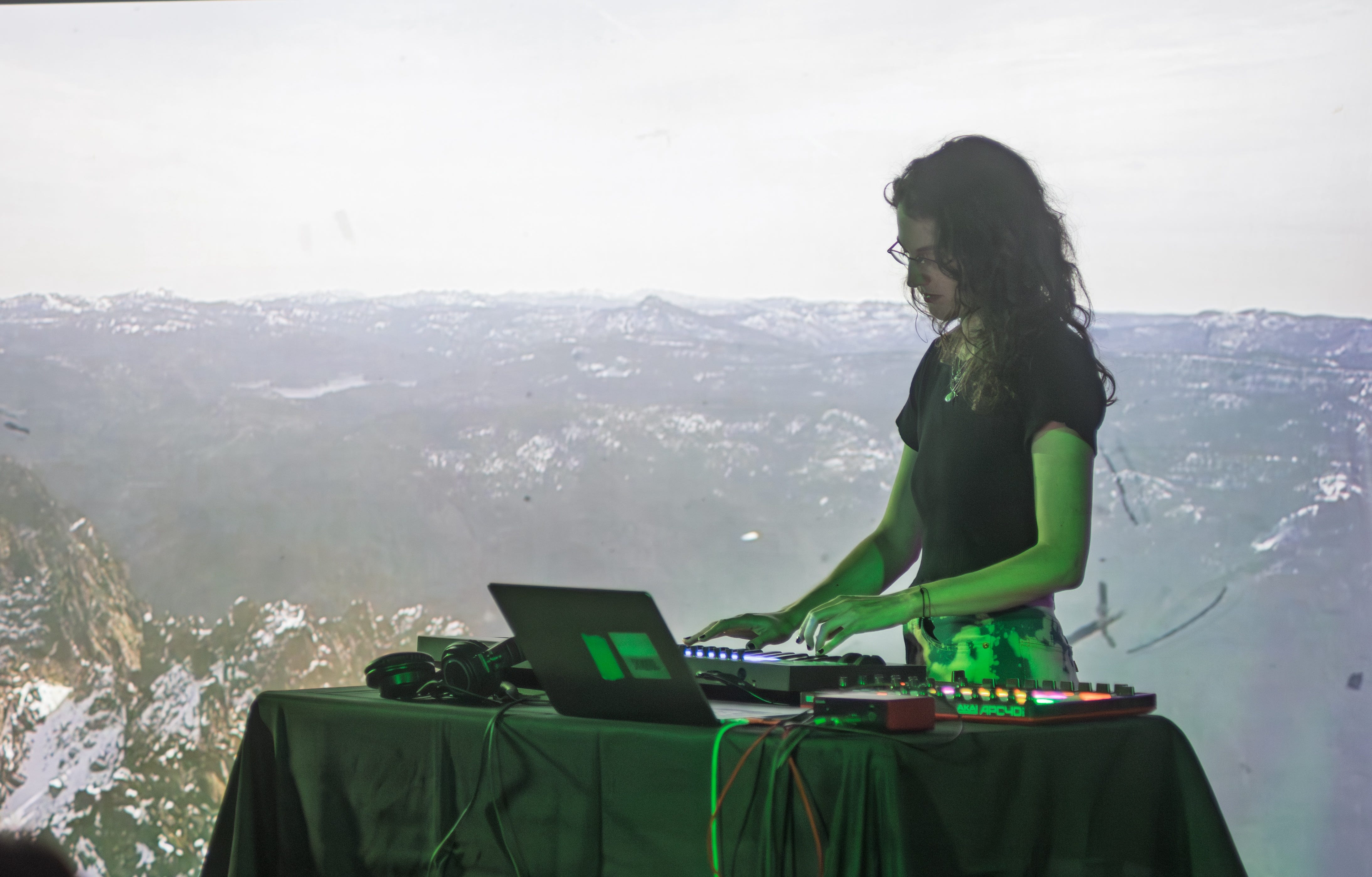
I feel like what I’m working on... well, this is a funny time to have an interview, because nothing’s out yet. A lot of what I played at Fieldset was related to music that I played at Public Records in March in New York, which was based on harmonic tunings, but also very kick drum-oriented. Very minimal, almost dancey. The music I’ve been making in the last month has been concerned with randomization and quantization, or how much randomness you can get away with if the timing is quantized. And integrating a lot of foley.
You said you played at Public Records and it was dancey. Is that on purpose—are you trying to make more of that kind of music?
I think it was just for Public Records. I was really inspired by their sound system.
Are you interested in making dance music?
I think I am.
What kind of dance music do you like?
I’ve really been enjoying listening to DJ Plead recently, especially his most recent album. I like the restraint, and his choice of timbres. I’ve been listening to a lot of Aleksi Perälä, too.
Are you the kind of person who’s making music every day? What’s your process like?
Right now, yes. To the point that, like, this weekend, I had plans, social plans. And it was kind of a pain to get myself out of the studio because I felt like I was really on a roll last week. Otherwise, I go in and out for sure.
The year after the fire was turbulent in terms of making music. I leaned a lot more on painting and drawing during that time, because it came much more easily to me. I was also doing a lot of scoring work, which requires a lot more discipline. So finding my own inspiration and discipline in that was something I had to work back towards.
Do you plan out a lot of stuff before you, like, start making the music?
I think once I find something that I like. But a lot of the time it’s like throwing spaghetti at the wall, or trying a hundred different things at random. But when something hits, when it resonates, I know I like it. From there, I can conceptualize a bigger structure.
So, what was the moment or thing that hit with the stuff you’re working on right now?
It feels too recent. I can’t reflect on it right now, I guess. I’ve been making music with a lot of different-length loops. That was a process I used on Timekeeper, which is a slightly older audio movement. So for me, it’s an old structure. But the type of audio and timbres I’m working with now are so much more developed.
Your music, at least in the past six years or so, is not really dance music. But it’s not really sound art or experimental music either.
Thank you. [laughs]
So who is the intended audience? How do you imagine people enjoying your music?
I appreciate when people just listen to the music and get what they get out of it. And don’t jump to labels like “ambient.”
Well it’s not ambient music.
But it gets put in that category a lot.
People think anything that doesn’t have a kick drum is ambient.
But I do have kick drums. That’s the thing that’s confusing. My goal is for people to listen and just hear it for what it is. When I listen to other people’s music, sometimes I like to identify if it was made in the first, second, third or fourth person. First, if it was made for themselves or someone else. Maybe it’s singular, or devotional. Maybe it was made for a group, like a crowd or a culture. Or if it was made for God, spirituality, or some cosmic realm.
I guess when I think about my own music, as with everybody’s, there’s always some sort of combination of those. But I do make music, a lot of the time, for myself. I also make it thinking of close people, both in my life and audience. Thinking about their ears as if they’re in a conversation. The group part has always been tricky for me, which is where the categories exist. I also consider the cosmic, or the things I can’t understand, in making my own music.
How does your process for scoring films differ from making your own music?
It’s highly collaborative. It’s so much back and forth, ideally working closely with the director. A lot can happen. It’s like a whole different set of variables. And music for a film is so different from music on its own. Sometimes film music can stand on its own. But it has a function in a very specific way. Music that is meant to be released and stand on its own can have a function. But that’s up to the person listening to it. It has a completely different placement. And I like being in service to a film—and someone else’s vision—in that process.
Are you the kind of person who does well if someone gives you parameters?
I think so. Yeah, but I also need to do both. I’ve always taken some time or found time to make my own music.
Can you tell me what the last couple films you scored were?
I scored a film called Union County. The director is Adam Meeks. That takes place in Ohio. And it’s a combination of a documentary and fictional narrative, where the two main actors have a story that unwinds. But the environment that they’re in consists of real people. And the real people are part of a drug rehabilitation program. It’s a story of addiction and recovery, highlighting this supportive program in Ohio that has been more successful than the average program
And then I scored a film called Humboldt USA, by G. Anthony Svatek. It’s like a film-essay-science-documentary feature about Alexander von Humboldt, featuring three different counties in the U.S. named after Humboldt. In each of them, people are futilely using technology to try to work with climate change. It’s also a love letter to Alexander von Humboldt, bringing his queer identity into the picture.
Do you do any other kind of sound or music work outside of your own music and film scoring?
Not right now. Teaching.
And how does drawing and painting interface with your music, if at all?
I’ve been painting a lot lately. I didn’t paint for a long time. In my 20s, I was working in art fabrication. Working for artists. And it was a lot of architectural fabrication, as well as painting. And everything in between. And then, at night, I was making music. And then music became more real and public facing. Eventually I devoted myself to a musical career. And then my visual art became more private.
So I think I’ll probably always have a relationship with both. And in my life, sometimes they’ll be forward-facing or back-facing. And there might be no way around that.
Would you consider yourself a full-time musician?
Yes.
So what’s a typical work day like for you, when you’re working on your music?
Those are really fun days. I like to wake up as early as I can, which is probably around 7 AM. I try to be in my studio as quickly as I can. The morning is my most productive time. So it feels like a race. How much can I do before lunch? I like to turn off Wi-Fi, and my phone, for two hours. And in those two hours, I have to make music. I can also stretch or walk around if I need to. Or drink coffee. But I can’t do anything else. It’s either music or staring at the wall. There’s no reading or responding to emails or anything like that. And that’s been really fruitful for me. Because you can actually do a lot in two hours. After lunch, I usually like to take a short nap. If I’m not on someone else’s schedule, that’s how I like to do it. And then I get back to things. In the afternoon, it’s more multitasking—responding to emails, editing, listening to music. It gets more scattered.
You have a degree in architecture, right?
No, I studied it as an undergrad. But I did work doing a lot of 3D modeling and physical modeling. But I don’t have a degree in it.
What do you teach at CalArts?
I teach individual lessons for music production or sound installation or whatever students are working on. And I love doing that. I’ve also taught a lecture course called Acoustics for Musicians, which is a perfect combination of things I’m interested in.
What is it exactly?
It’s designed for anyone in the music school to be able to take it, because it’s about the science of sound. The beginning of the semester focuses on the source of sound and things like tone and noise, timbre, overtone series, tuning systems. And then it moves into the medium of how sound travels. So whether sound is traveling through air or solids, and then different phenomena when sound interacts in space. Like, the doppler effect, or interference. And then it goes into room acoustics. A little bit about how speakers and microphones work. And then it ends with psychacoustics and ear safety and hearing anatomy. How we perceive sound.
It’s the study of acoustics: source, medium, receiver. And the course follows that.
How did you become so interested in acoustics of sound?
I think I’ve always been interested in acoustics. And I like the social aspects of teaching. It’s such a cliché, but you do learn from teaching. I always notice that the advice I give students when they’re working through creative problems is usually advice that I need to hear.
Hola , Interesante Entrevista. Un Saludo